VisionChina 2024 Shenzhen · Machine Vision · Industrial Computing · Edge AI · 3D Vision
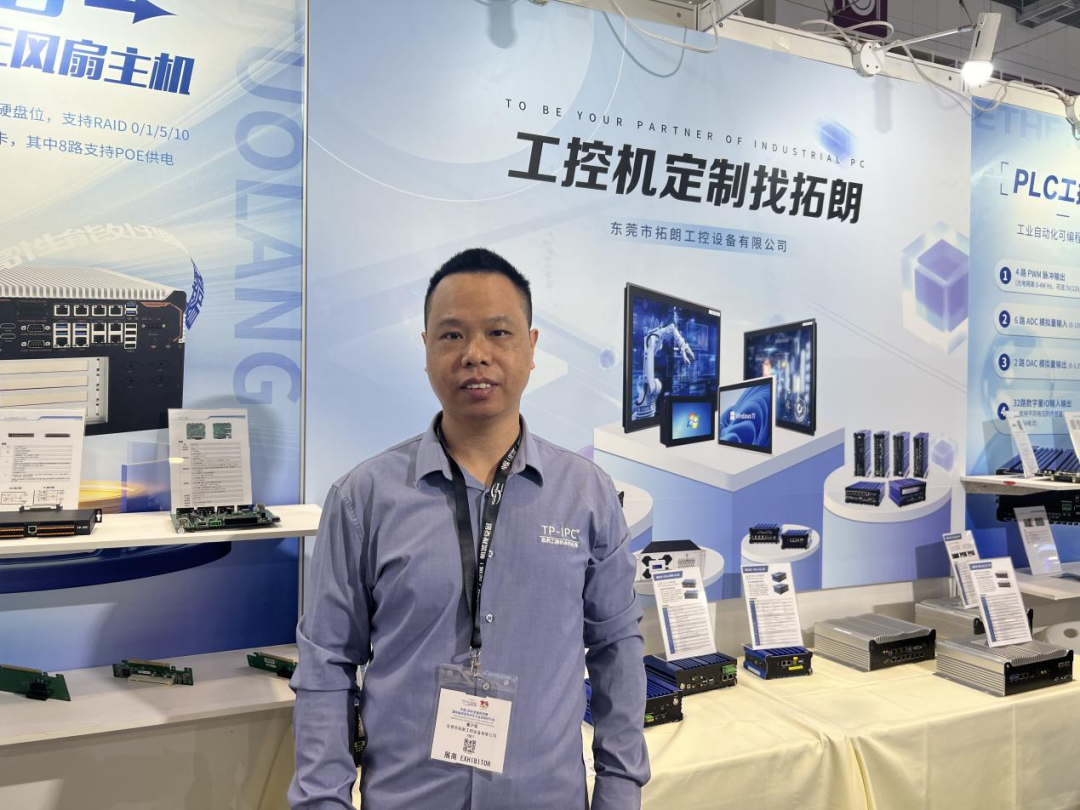
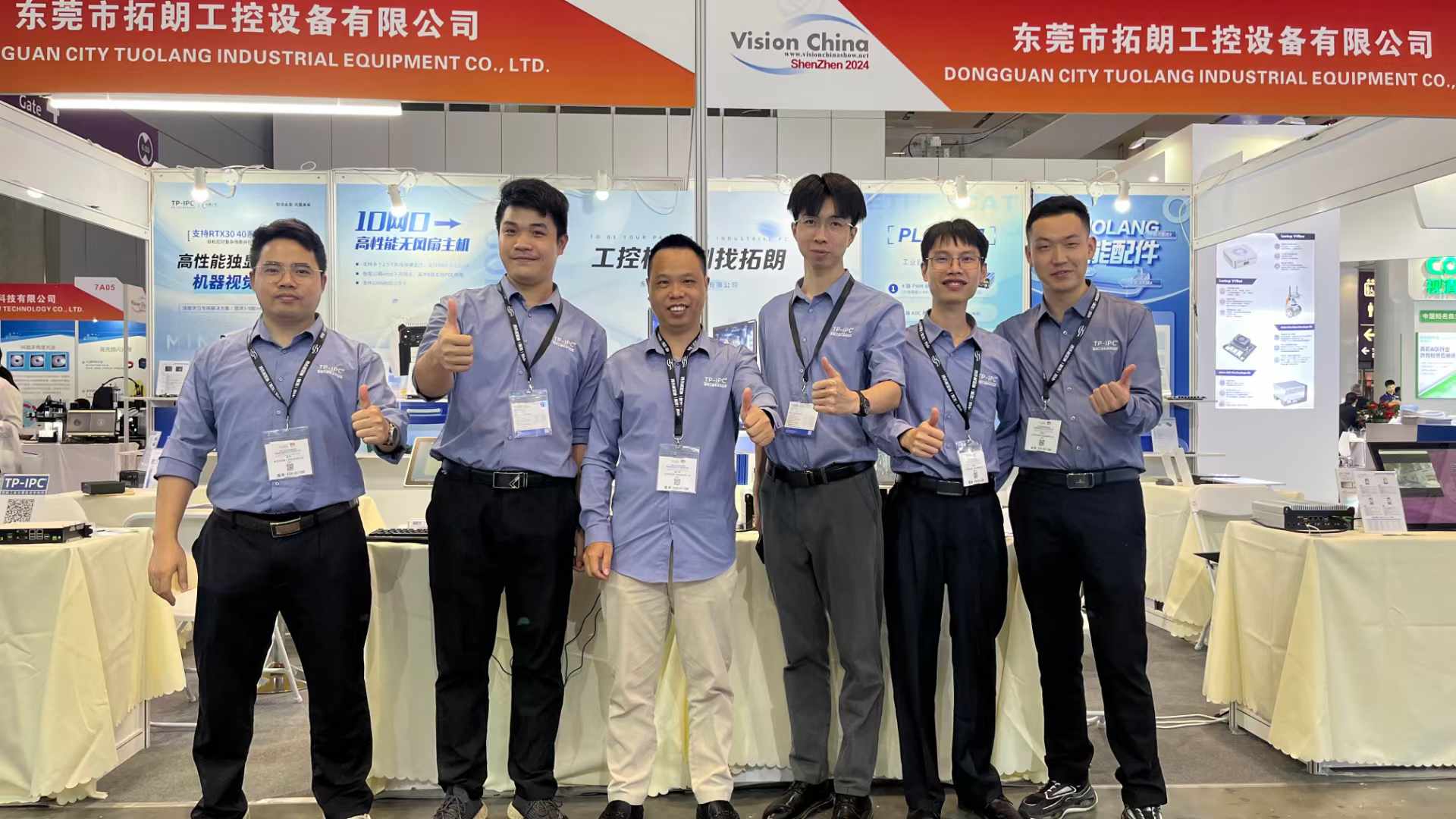
At VisionChina 2024 (Shenzhen) from October 14–16, the organizer, the Machine Vision Industry Union (CMVU), conducted an in-depth interview with Mr. Dong Huying, General Manager of Dongguan Tuolang Industrial Equipment Co.
In this conversation, Mr. Dong shared the company’s development history, core competitiveness, and strategic direction in the fields of machine vision and industrial computing. He further introduced Tuolang’s innovations in industrial PCs, edge computing, 3D vision systems, and AI-driven industrial control platforms, as well as the company’s long-term overseas expansion strategy driven by micro-innovation and precise market positioning.
Mr Dong: Founded in 2016, TP-IPC is a national high-tech enterprise and a speciality enterprise in Guangdong Province. We have been committed to the development and manufacture of industrial computers, providing highly reliable and high-level industrial PC-based control solutions for various segments of the industry. The main production and management products are: embedded industrial controllers, desktop wall-mounted industrial controllers, rack-mounted industrial controllers, industrial all-in-one PCs, industrial monitors and other series of products. Our products in all kinds of large-scale projects have been verified, in industrial automation, energy and power, machine vision, edge computing, deep learning, motion control and other industries have received high standards of customer evaluation.
In my opinion, vision plus industrial controller undoubtedly plays the core role of ‘eyes’ and ‘brain’ of the equipment in the field of vision, so we attach great importance to both, thanks to the company always adhere to the principle of quality first, continue to increase investment in research and development, and provide accurate solutions for the The company has always insisted on the principle of quality first, continued to increase investment in R & D, and provide accurate solutions for the industry segments. Because of this, the company has been able to maintain a steady growth of more than 30% per year.
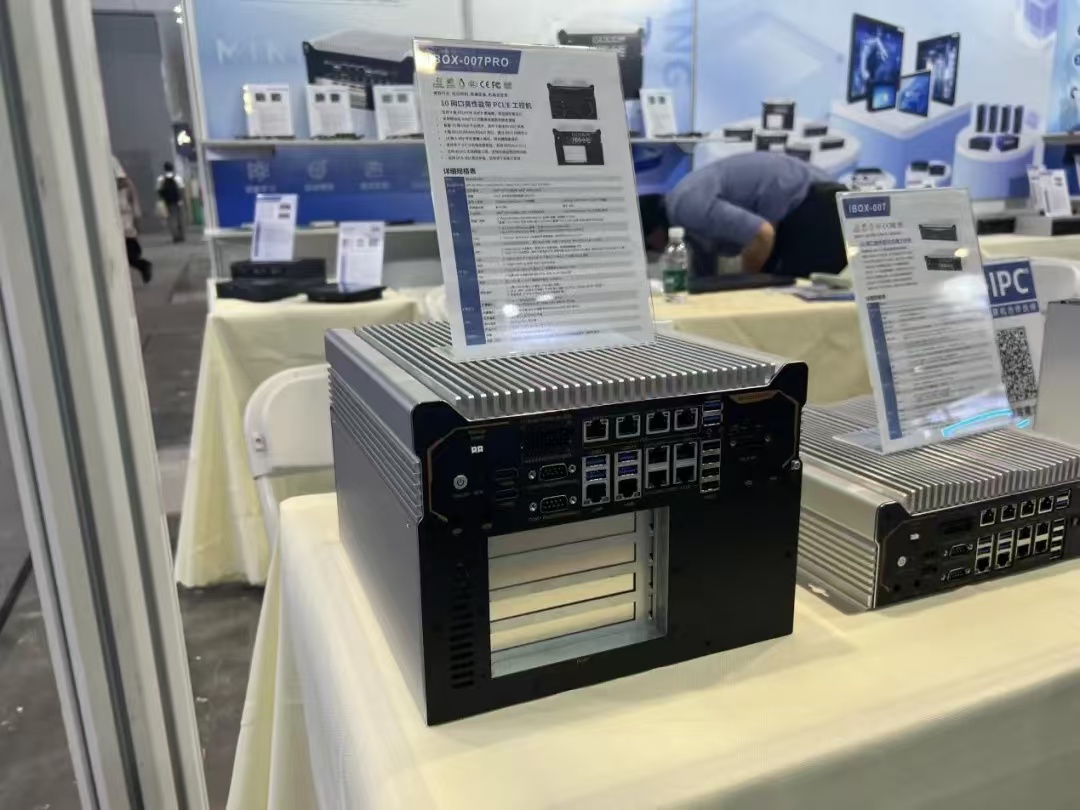
Mr Dong: Sure, very happy to share. In the current vision field, we clearly feel the increasing competition in the low-end market, while at the same time, there is a growing demand for 3D vision. This trend puts higher demands on the computers’ arithmetic power and performance. To meet this challenge, we at Tuolang Industrial Equipment Co have launched a fanless industrial computer with 12th and 14th generation Intel desktop processors. This product supports discrete graphics cards such as 4060, and is equipped with 10 network ports, each of which can provide a 2.5G connection rate while supporting up to two GPUs, thus dramatically increasing the arithmetic power and performance of machine vision, and greatly improving the productivity of the equipment.
Mr Dong: Machine vision has a wide range of applications, but I think the market is currently experiencing increasing demand for highly reflective, highly detailed, and 3D vision. Because these applications have high resolution and involve 3D depth detection, they require extremely high GPU arithmetic. Therefore, we usually first determine the usage scenarios with our customers and then make recommendations for performance requirements. This is significantly different from our general industrial control needs, and, while some applications have common needs, they have high rate requirements and require multiple cameras to be connected. As an industrial computer provider, we need to provide superb performance to enable a machine to connect more cameras, e.g. from 4 to 10 or even 15, and process 60 frames per second. In this way, customers can reduce application costs and overall solution costs.
Mr Dong: In my opinion, the innovation ability of an enterprise is firstly based on a deep insight into the market. Innovation must be able to solve the shortcomings of existing products or services in the market and create real value for customers, so that customers are willing to pay for innovation.
Personally, I like this industry very much. The application of industrial controllers as computing terminals involves numerous subsectors, which provide us with rich and diverse needs. After grasping the needs of our customers, we will gain an in-depth understanding of their application scenarios and, relying on our professional strengths, provide them with more micro-innovations in terms of integration and optimisation.
For SMEs, I think micro-innovation can more directly help customers save the cost of use, simplify the programme, and make the innovation more grounded and practical. Therefore, we have been committed to integrating applications in niche industries based on industrial controllers to provide valuable and groundable micro-innovation solutions to help customers reduce costs and increase efficiency. In this way, we continue to drive and maintain the innovation capability of our business, ensuring that we continue to move forward in the dynamic industry of machine vision.
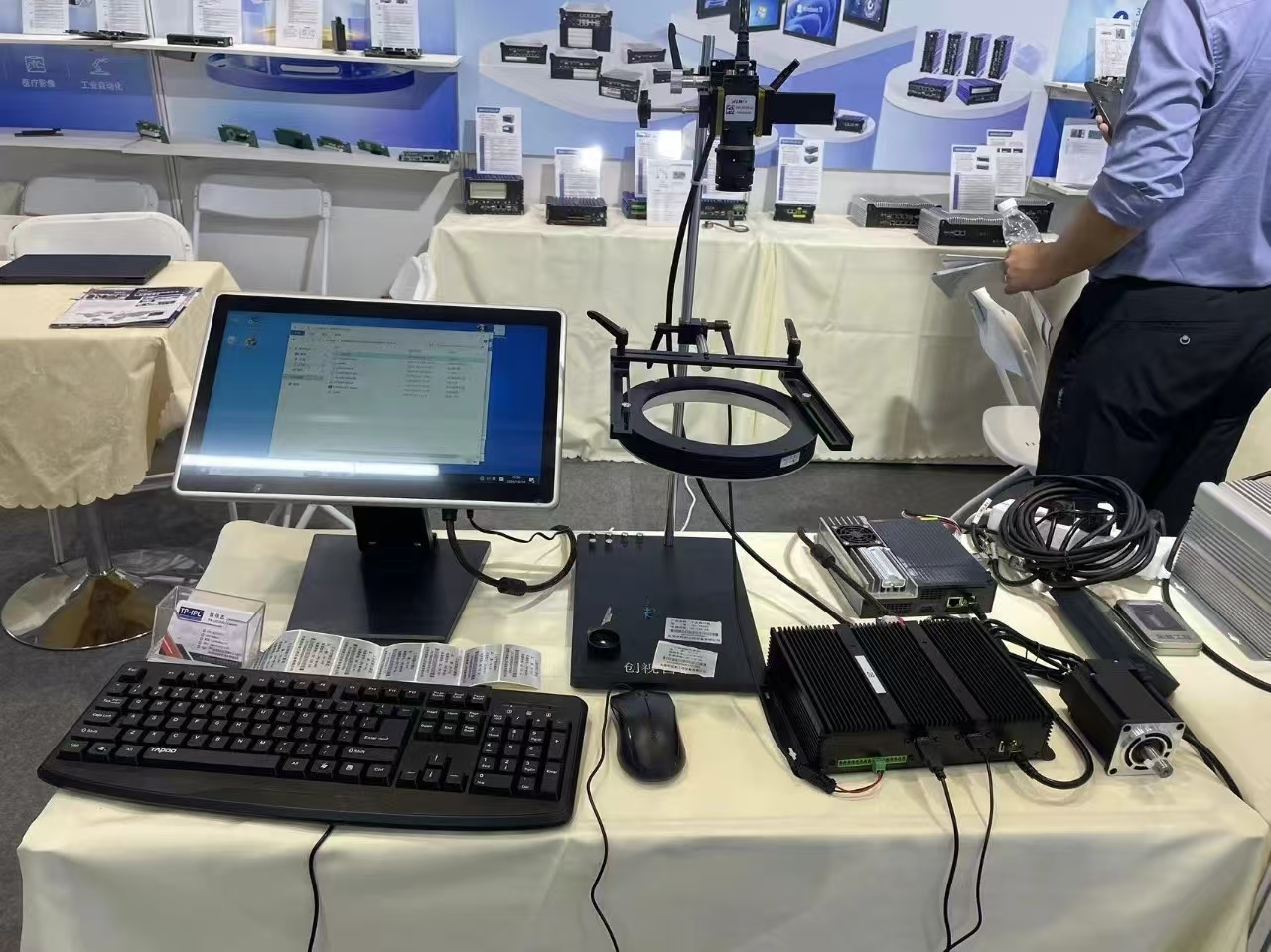
In my field of vision, for example, vision used to be separate from light sources and industrial controllers. We have responded to the needs of our customers with a wide range of circuits by integrating the light source inside the industrial controller, which can be seen as a micro-innovation. Another thing we are currently working on is that motion control is often involved in vision systems. The traditional solution is either to insert a motion control card, which tends to cause vibration problems, or to separate the motion control and handle it with another industrial control machine, which in turn leads to communication real-time problems. What we are doing now is to highly integrate vision, light source and motion control, and at the same time reduce the size so that customers can have more flexibility in their wiring solutions and applications. I think this is also a very practical micro-innovation. Whether it’s from the perspective of cost, programme or cost reduction and efficiency, innovation only has value if it really improves the productivity efficiency of the customer.
Mr Dong: Actually, for the overseas market, I always think it will become an important direction for our company’s future development. In the past, the centre of the international market of the industrial control machine industry might be in Taiwan and Germany. Since Tuolang Industrial Equipment Co has been involved in foreign trade since 2020, I obviously feel that the domestic growth rate in the past two years has been very fast, and the relevant
Mr Dong: The proportion of our foreign trade is growing very fast, and we have established long-term cooperation with some head enterprises in Europe. Their orders are obviously much larger than domestic orders. For us, the vision must be broadened, not just limited to the domestic market. Overseas markets not only have great potential, but also help us improve product quality and internationalisation. Therefore, we will continue to increase the expansion of overseas markets and seek more opportunities for cooperation.
Mr Dong: I think vision plus AI is the core of ‘Vision plus x’. From the device level, devices are now getting smarter and smarter with the addition of AI processing, especially deep AI, which enables them to work more proactively. In fact, many cutting-edge concepts, such as humanoid robots or digital people, will ultimately rely on the expanded application of vision and AI in order to realise on-the-ground applications. Therefore, I believe the future market opportunities in this area will be very large.
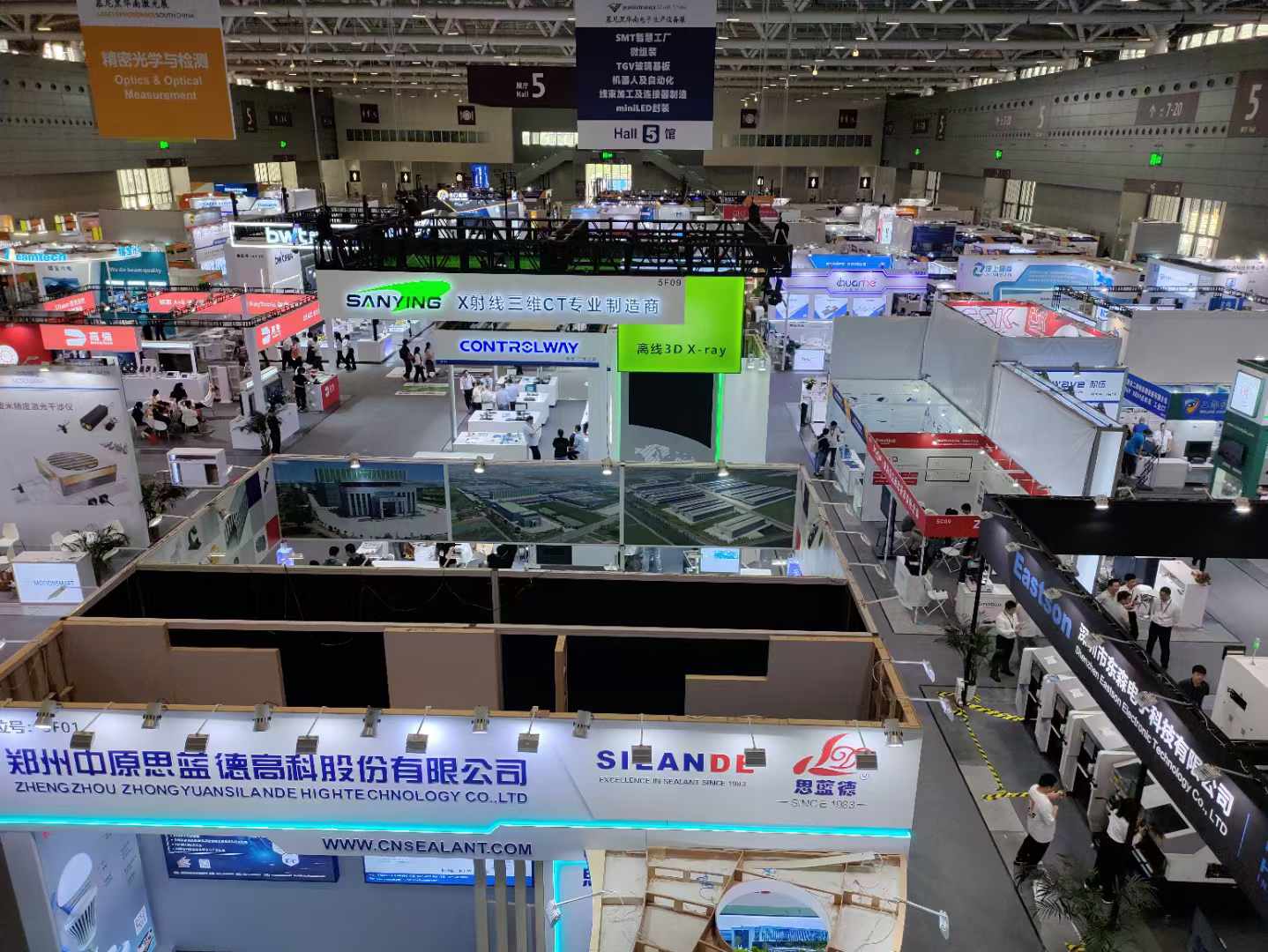
Mr Dong: My overall impression of this exhibition is quite good. There were really a lot of impressive exhibits of cross-border convergence technologies, demonstrating the wide range of applications and potential of machine vision in various fields. The exhibition halls were well patronised and the progress in the field of machine vision was particularly remarkable, clearly showing a shift from traditional 2D to 3D, a change that impressed me and made me look forward to the future of machine vision.
In addition, I can clearly feel that in the whole industrial chain, our domestic manufacturers cooperate quite well with each other. They were able to quickly bring many high-precision projects to fruition, and this efficient collaboration is remarkable.
Mr Dong: Looking ahead, I think the combination of 3D+AI and vision technologies will be an important trend in the future. These technologies will bring a wider range of application scenarios and higher precision to machine vision, which will drive the further development of the industry.Tuolang Industrial Equipment Co will continue to follow the industry trend in 2025, and increase the R&D investment in the combination of 3D+AI and vision technologies. We hope to bring more advanced and reliable machine vision solutions to the market through continuous innovation to meet the growing needs of our customers.
Explore more about our industrial computing platforms: