
Manufacturing systems are undergoing a structural transformation driven by data connectivity and intelligent perception technologies. Among the most influential technologies in this transition are industrial internet platforms and machine vision systems. Together, they enable factories to collect real-time operational data, analyze production conditions, and respond automatically to process changes.
Machine vision provides high-precision visual information about products and production processes. Industrial internet platforms integrate this information with equipment data, production parameters and operational analytics. When these systems operate together, manufacturing processes can move beyond traditional manual supervision toward automated inspection and data-driven decision making.
This integration is increasingly becoming a core infrastructure of modern manufacturing environments.

Machine vision systems function as the perception layer within intelligent production environments. High-resolution cameras combined with image processing algorithms allow production systems to detect defects, measure dimensions and monitor product quality in real time.
Compared with manual inspection, machine vision provides higher accuracy and consistency. Visual data collected during production can also be stored and analyzed continuously, creating a detailed record of manufacturing performance.
In many production scenarios, machine vision systems are able to identify defects at extremely small scales and detect abnormal production conditions before they affect downstream processes. This capability makes machine vision an essential component of modern quality control systems.
While machine vision generates large volumes of visual data, industrial internet platforms provide the infrastructure required to manage and analyze this information.
Industrial internet systems connect production equipment, sensors, control systems and computing platforms into a unified network. Through this connectivity, data collected from machine vision inspection can be integrated with other operational data such as equipment status, production parameters and process control signals.
The result is a continuous operational loop:
Perception → Data Integration → Analysis → Process Adjustment
Through this process, production systems can identify inefficiencies, detect equipment anomalies and optimize manufacturing parameters automatically.
The integration of industrial internet platforms and machine vision systems enables manufacturing systems to evolve from simple inspection processes toward broader production optimization.
Visual inspection results can be analyzed together with production data to identify the root causes of defects. Equipment parameters can then be adjusted in real time through automated control systems.
This type of closed-loop process control allows factories to reduce waste, improve product consistency and respond quickly to production abnormalities. Over time, accumulated production data can also support predictive maintenance and long-term process improvement.
As manufacturing systems continue to generate more operational data, the value of integrated analysis and automated decision making becomes increasingly significant.
Although the integration of industrial internet platforms and machine vision technologies offers significant benefits, many manufacturing enterprises face practical challenges during implementation.
Small and medium-sized manufacturers often operate with limited budgets and limited technical resources. Integrating advanced inspection systems with existing equipment may require careful planning to ensure compatibility with legacy control systems and production workflows.
In addition, the complexity of industrial data integration can create barriers for companies that lack specialized technical teams.
To address these challenges, many industrial technology providers focus on modular deployment strategies. By gradually introducing machine vision systems and data platforms, manufacturers can adopt intelligent technologies step by step while minimizing operational risk.
As manufacturing continues to evolve, the integration of industrial internet platforms and machine vision technologies will expand further.
Advances in artificial intelligence are improving the ability of vision systems to analyze complex visual data and detect subtle production anomalies. Three-dimensional vision technologies are also expanding the range of inspection scenarios, particularly in high-precision manufacturing industries.
At the same time, edge computing systems are increasingly used to process visual data directly at the production site. By performing AI inference and data processing locally, edge computing reduces latency and improves system reliability in industrial environments.
These developments are gradually transforming manufacturing systems into intelligent production environments capable of continuous monitoring, analysis and optimization.
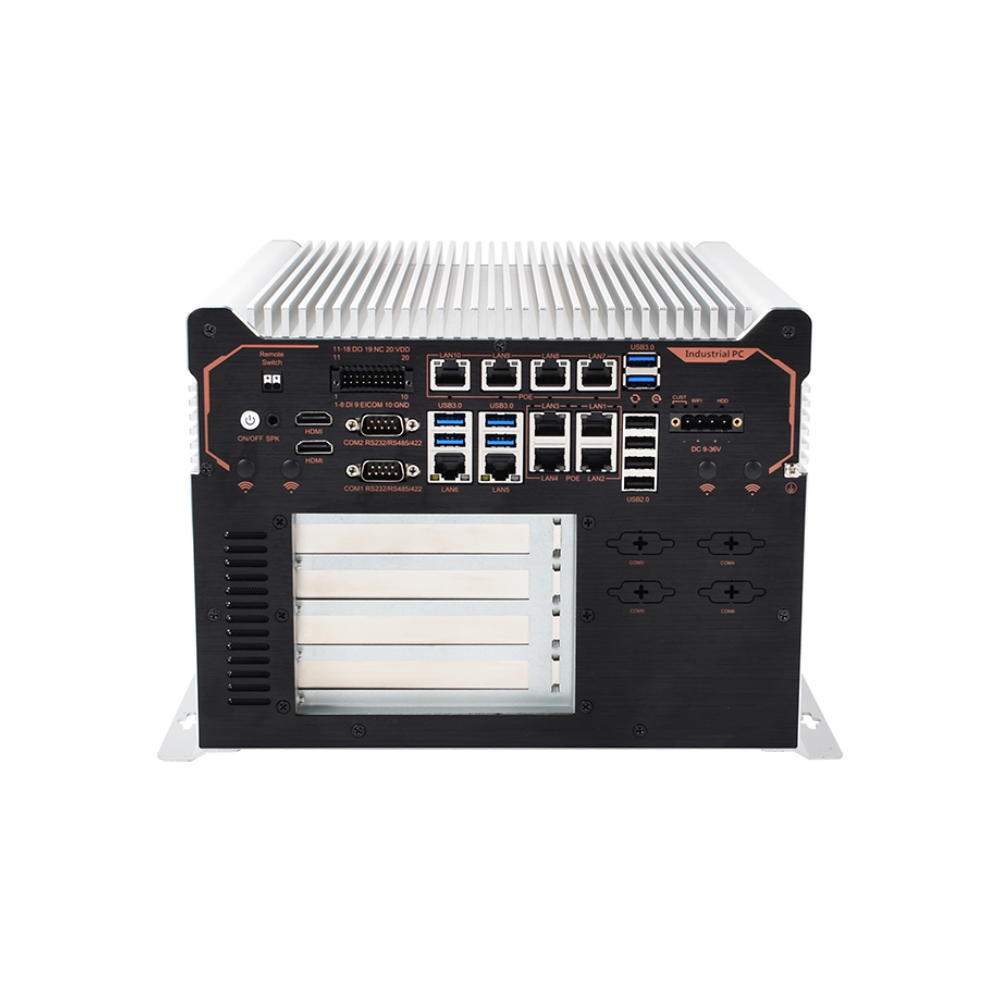
With strong storage capability, flexible PCIe expansion, and industrial-grade reliability, it supports edge AI inference, intelligent monitoring, and distributed industrial data processing.
• Up to 8 Performance-cores and 8 Efficient-cores
• Intel® Active Management Technology (AMT) for remote out-of-band system management
• Intel® UHD Graphics 770 with up to 32 EUs based on Intel® Xe Architecture
• Supports up to 4 swappable 2.5″ HDDs with RAID 0/1/5/10
• Hardware media engine capable of decoding 40+ 1080p video streams at 30 FPS
• 4× PCI/PCIe expansion slots with up to 120W GPU power support
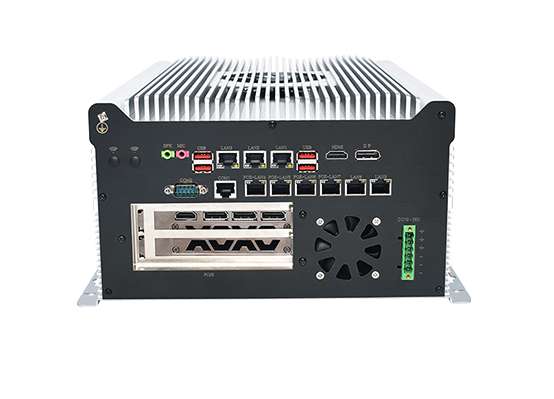
• Supports 12th–14th Gen Intel® Core™ processors (LGA1700) for high-performance edge computing
• 6× PoE Gigabit LAN ports + 3× additional Intel LAN ports for multi-camera vision systems
• PCIe 4.0 x16 expansion supporting high-performance NVIDIA® GPUs for AI acceleration
• Up to 128GB DDR4 memory with high-speed NVMe and RAID storage options
• Multiple industrial I/O interfaces including COM, GPIO and USB for equipment integration
• 9–36V wide-range DC input and industrial-grade design for reliable 24/7 operation
Industrial internet platforms and machine vision systems are becoming essential components of modern manufacturing infrastructure. By combining intelligent perception with real-time data connectivity, these technologies enable factories to monitor production conditions more accurately and respond more efficiently to operational changes.
As industrial systems continue to generate and analyze large volumes of production data, the integration of these technologies will play an increasingly important role in improving manufacturing efficiency, product quality and operational reliability.